Fencing pasture for goats or horses, a garden away from deer, or a property line on hunting land? Tell us the acreage, the animals and how much of the line is wooded.
Common choices
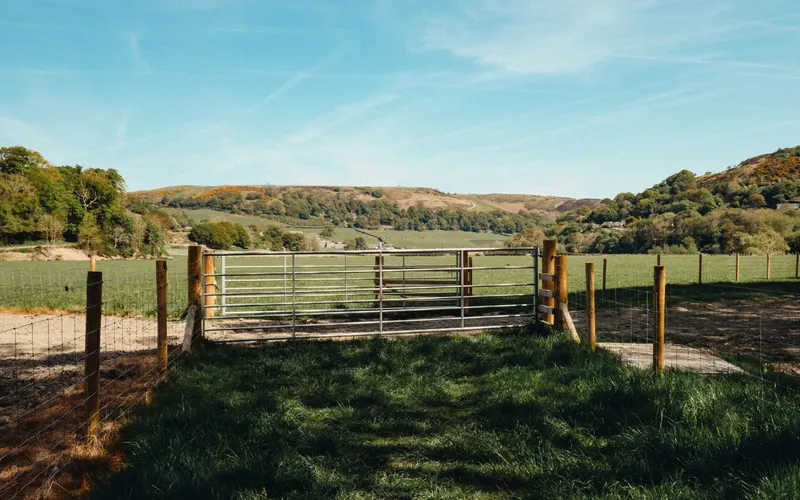
- Woven wire with small openings for goats and sheep, sometimes with an electric strand.
- Welded wire for gardens, dog runs and small pens.
- Field fence with wide gates for tractors and trailers.
- Solid corner and brace posts so wire stays tight.
Goats test fences, so tight wire and solid corners matter more than anything else on a livestock fence.
Choosing farm and field fence
- Woven wire (field fence): the general-purpose choice for sheep, goats and mixed livestock; smaller openings at the bottom keep small animals in.
- Welded wire: lighter, good for gardens, dog runs and poultry, but not built to take livestock leaning on it.
- High-tensile wire: long runs at lower cost per foot, often electrified, common for cattle.
- Board fence: the classic horse and road-frontage fence; it needs paint or stain and the odd board replaced.
- Barbed wire: still used for cattle, but a poor choice anywhere horses are kept.
Corners, braces and gates
Wire fence is only as tight as its corners. Every corner, end and gate post needs a braced assembly (an H-brace or similar) so the wire can be stretched tight and stay that way. Size gates for what goes through them: a walk gate for people, and a wide gate for a tractor, mower or trailer.
Before fencing land in Colleton County
- Walk the whole line and clear brush and low limbs first
- Confirm the boundary: rural lines can be far off old fences, so use the survey or the county GIS map as a first check
- South Carolina law requires you to contact SC811 at least three business days before you start digging, not counting the day you file, weekends or holidays, and fence post holes count as digging (SC811). The request is free.
- Plan for creek crossings and low spots where water runs
- The Colleton County Cooperative Extension office can advise on fencing for your livestock
How a farm fence goes in, step by step
- Walk the line. Mark corners, gates, creek crossings and any brush that has to go.
- Set corners and braces. These go in first because everything else pulls against them.
- Set line posts. Spacing depends on the wire, the ground and the animals.
- Stretch and fasten the wire. Wire is pulled tight between braced corners, then fastened to each post.
- Hang the gates and walk it. Check every corner again after the first few weeks, when posts settle.
What affects the price of farm fence
- Total length, and how many corners and gates it has
- Wire type and height, which depend on the animals
- Wood or steel posts
- Clearing brush, trees and old wire off the line
- Rock, creek crossings and how easily equipment can reach the line
On long runs, corners and gates can matter as much as the length, so ask for them to be listed separately.
Small acreage, working farms and hunting land
A few goats or a garden on a small lot in Colleton County calls for tight, small-mesh wire and a walk gate or two. A working pasture needs long runs, more gates and stronger corners. Hunting land often needs only a marked boundary, or a fence to keep neighboring stock out. Tell the installer what the fence has to hold, what it has to keep out, and how you'll get through it.
Problems with an older farm fence
- Leaning fence posts: why posts move, and how they're reset
- Storm and fallen tree damage: what to do first when a tree lands on the line
Farm fence questions in Colleton County
What fence works best for goats?
Woven wire with small openings, tall enough that they can't jump it and stretched tight so they can't push through. Many owners add an electric wire on the inside.
What fence is safest for horses?
Board fence, or a highly visible wire fence designed for horses. Avoid barbed wire, which can cause serious injuries.
Do I need to call 811 for farm fence posts?
South Carolina law requires you to contact SC811 at least three business days before you start digging, not counting the day you file, weekends or holidays, and fence post holes count as digging (SC811). The request is free.
Book Your Free Fence Estimate
No obligation. Two quick steps.